

Introduction
If you have ever watched a baking competition and felt your heart race during the final reveal, you already know exactly what The Great British Bake Off Season 10 felt like for millions of viewers. This was not just another season. It was a celebration of 10 years of flour, butter, tears, and triumph. Season 10 brought back everything fans love about the show and then added a little extra magic on top.
Whether you are a longtime fan trying to relive the season or a newcomer looking for a quick breakdown, this article covers everything you need. You will find out who won, who the finalists were, how many episodes aired, who the judges and hosts were, and which contestants made the biggest impression.
Who Won The Great British Bake Off Season 10?
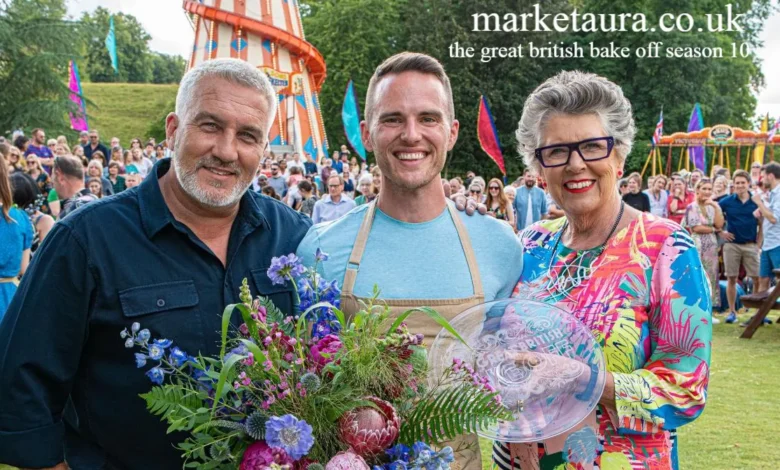
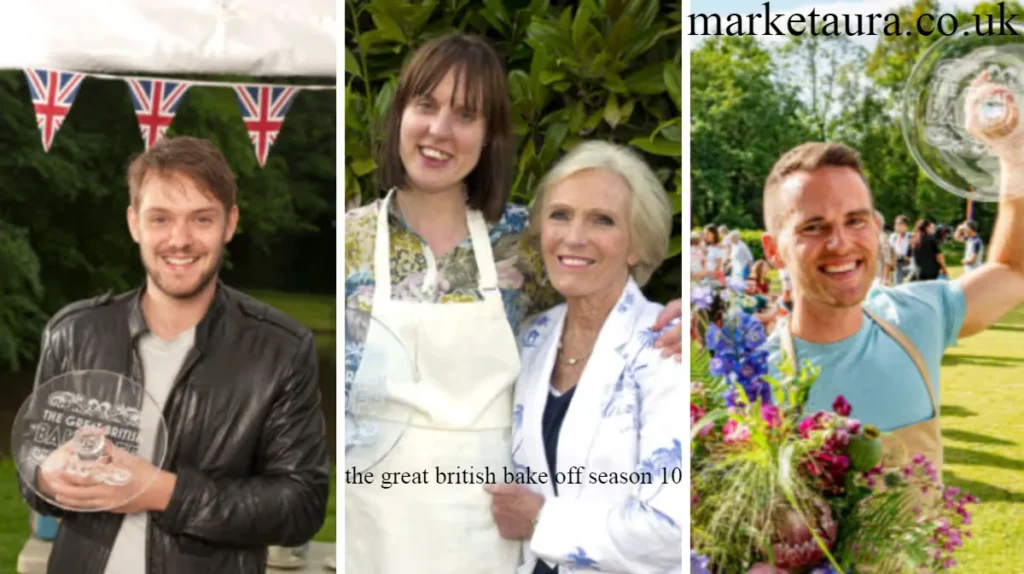
The winner of The Great British Bake Off Season 10 was David Atherton. He took home the title in the 2019 season finale, which aired on October 29, 2019, on Channel 4 in the United Kingdom.
David was a 36-year-old international health adviser from North Yorkshire. What made his win so surprising was that he never once received a Hollywood Handshake from the judges throughout the entire competition. Yet he consistently delivered creative, technically strong bakes that wowed both the judges and viewers at home.
His win genuinely shocked people. Many fans expected another finalist to take the crown, but David proved that consistency and creativity beat flashiness every single time.
Who Were the Finalists in Bake Off Season 10?
Three bakers made it to the final of The Great British Bake Off Season 10. Those three finalists were:
- David Atherton from North Yorkshire, age 36, health adviser
- Alice Fevronia from London, age 28, geography teacher
- Steph Blackwell from Chester, age 28, retail manager
Steph had been a strong frontrunner throughout the series. She won multiple Star Baker titles and was widely considered the fan favourite going into the final. Alice brought personality and bold flavour combinations throughout the competition. David, as mentioned, was the dark horse who delivered when it mattered most.
The final episode was filmed at Welford Park in Berkshire, the iconic country house estate that has served as the show’s filming location since 2014.
Who Were the Contestants on The Great British Bake Off Season 10?
Season 10 kicked off with 13 bakers, one more than the usual 12. Here is the full contestant list: marketaura
- David Atherton (Winner)
- Alice Fevronia (Finalist)
- Steph Blackwell (Finalist)
- Henry Bird from Bath, student
- Michael Chakraverty from Stratford-upon-Avon, flight attendant
- Priya O’Shea from Hertfordshire, project manager
- Helena Garcia from London, online project manager
- Rosie Brandreth-Poynter from Worcestershire, vet
- Michelle Evans-Fecci from Tenby, Wales, nurse
- Phil Thorne from Croydon, HGV driver
- Dan Chambers from London, full-stack developer
- Amelia Le Breton from Surrey, actor
- Anneliese Foerster from Bath, researcher
Each contestant brought their own story, style, and specialty to the famous tent. The diversity in backgrounds made Season 10 one of the most relatable and warm series in the show’s history.
How Many Episodes Are in Bake Off Season 10?
Season 10 had 10 episodes in total. This matched the show’s milestone of celebrating its 10th anniversary, which felt intentional and fitting. The season premiered on August 27, 2019, and the finale aired on October 29, 2019.
Each episode focused on a different baking theme. Here is a quick breakdown of the weekly themes: source: The Great British Bake Off – Official Website
- Episode 1: Cake Week
- Episode 2: Biscuit Week
- Episode 3: Bread Week
- Episode 4: Dairy Week
- Episode 5: Plant-Based Week (a new addition for Season 10)
- Episode 6: Desserts Week
- Episode 7: Pastry Week
- Episode 8: Cake Week Part 2 (Patisserie)
- Episode 9: German Biscuit Week (Semi-final)
- Episode 10: The Final
The Plant-Based Week was introduced for the first time in the show’s history during this season. It reflected growing interest in vegan and plant-based eating, and it pushed the bakers into genuinely unfamiliar territory.
Who Were the Judges in Season 10?
The judging panel remained the same beloved duo that fans had grown to trust since Season 7.
Paul Hollywood served as the head judge. He is a professional baker and bread expert who has been a judge since the very first season. His Hollywood Handshake is one of the most iconic moments in competitive baking television.
Prue Leith joined as the second judge starting from Season 8. She is a celebrated chef, restaurateur, and food writer. Her warm, direct feedback style balances well with Paul’s more technical approach.
Who Were the Hosts in Season 10?
The hosting duties were handled by Noel Fielding and Sandi Toksvig. Both had been hosting since Season 8 together. Noel brought his signature quirky humour, while Sandi offered wit and warmth. This was actually Sandi’s final season as co-host. She stepped down after Season 10 and was replaced by Matt Lucas starting from Season 11.
What Made Season 10 Special?
Season 10 was significant for a few reasons beyond just the baking. It marked the 10th anniversary of the show, which first aired on BBC Two back in 2010 before moving to Channel 4 in 2017. The producers leaned into the milestone theme throughout the series. source: Good Food
The introduction of Plant-Based Week showed that the show was willing to evolve and reflect modern food culture. Viewers appreciated that. It also sparked genuine debate about whether vegan baking belongs in a traditional competition, which only added to the buzz around the season.
David’s unexpected win also reminded viewers that star baker titles and handshakes are not everything. Sometimes the person who bakes smart, stays calm, and peaks at the right moment wins it all.
Conclusion
The Great British Bake Off Season 10 gave fans a season worth celebrating. From David Atherton’s surprise victory to Steph Blackwell’s Star Baker dominance and the first-ever Plant-Based Week, it had drama, flavour, and real heart. If you have not rewatched the final yet, it is absolutely worth going back to. And if you are new to the show, Season 10 is honestly one of the best places to start.
Who was your favourite contestant from Season 10? Drop your thoughts and share this with a fellow Bake Off fan who would love the trip down memory lane.
FAQs
1. Who won The Great British Bake Off Season 10?
David Atherton won Season 10. He was a 36-year-old health adviser from North Yorkshire and was crowned the winner on October 29, 2019.
2. Who were the three finalists in Bake Off Season 10?
The three finalists were David Atherton, Alice Fevronia, and Steph Blackwell.
3. How many episodes does Season 10 of Bake Off have?
Season 10 has 10 episodes. It ran from August 27, 2019, to October 29, 2019.
4. Who were the judges on The Great British Bake Off Season 10?
Paul Hollywood and Prue Leith were the judges.
5. Who hosted Season 10 of The Great British Bake Off?
Noel Fielding and Sandi Toksvig co-hosted Season 10. It was Sandi’s final season.
6. Where is The Great British Bake Off filmed?
The show is filmed at Welford Park, a country estate in Berkshire, England.
7. Did David Atherton ever get a Hollywood Handshake?
No. David never received a Hollywood Handshake during the entire season, yet he still won, which made his victory especially memorable.
8. Who was the fan favourite in Season 10?
Steph Blackwell was widely considered the fan favourite. She won multiple Star Baker titles before the finale.
9. What was new in Bake Off Season 10?
Plant-Based Week was introduced for the first time in the show’s history during Season 10.
10. How many contestants were in Season 10?
Season 10 started with 13 contestants, one more than the usual 12.
Author Bio: Awais is an SEO content strategist with a passion for creating reader-first articles that rank and engage. With experience across entertainment, lifestyle, and food content, he specialises in turning complex topics into clear, conversational reads that people actually enjoy. When he is not writing, he is probably watching a baking show and critiquing the technical challenge.
email: johanharwen@314gmail.com
Author Name: Awais