
Introduction
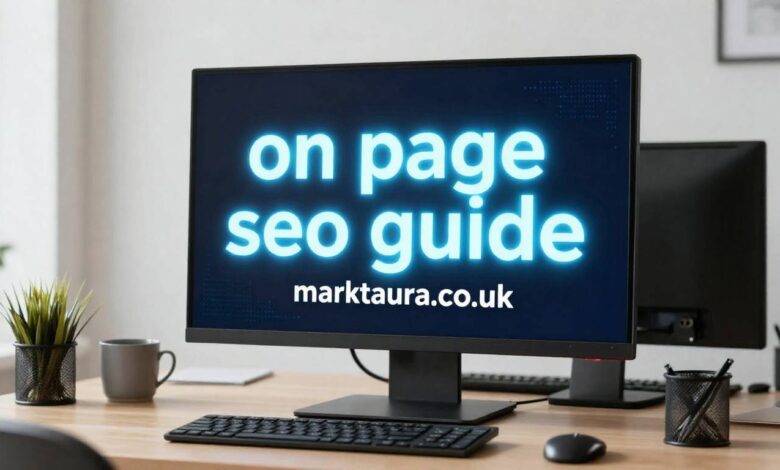
You have probably heard that on page seo guide can make or break your rankings, and honestly, that is true. If your content is great but your pages are not structured the right way, search engines may never show it to the people who need it. On page SEO is the process of optimizing individual web pages so they rank higher and earn more relevant traffic. It covers everything from your title tags to your images to the words you choose in your first paragraph.
In this guide, I will walk you through what on page SEO actually means, why it matters so much, and how you can optimize your own pages step by step. You will also get a breakdown of the most important on page seo guide factors, a comparison with off page SEO, and answers to common questions people search for. By the end, you will have a clear, practical checklist you can use on every page you publish.
What Is On page SEO Guide?
On page SEO Guide is the practice of optimizing elements on your own website, such as content, HTML tags, and internal links, to help search engines understand and rank your pages.
Unlike off page SEO, which happens outside your website through backlinks and mentions, On page SEO Guide is fully within your control. You decide your headings, your keywords, your images, and your internal linking structure. This makes it one of the fastest areas to improve because you do not need to wait on other websites to notice you.
Quick definition: On page SEO Guide refers to all the actions you take directly on a webpage to improve its visibility in search results.
A few core elements fall under On page SEO Guide:
- Title tags and meta descriptions
- Header tags such as H1, H2, and H3
- Keyword usage and placement
- Content quality and readability
- Internal linking
- Image optimization
- URL structure
- Page speed and mobile friendliness
Why Is On page SEO Guide Important?
On page SEO Guide is important because it tells search engines exactly what your page is about, which directly affects whether you rank for the right keywords.
Search engines like Google use complex algorithms to match user searches with relevant pages. If your page lacks clear signals such as keyword rich headings or a well written meta description, search engines may struggle to understand your content, even if it is genuinely useful.
Here is why it matters in practical terms:
- It improves relevance. Clear structure helps search engines match your content to the right search intent.
- It boosts click through rate. A compelling title and meta description encourage more people to click your result.
- It enhances user experience. Good formatting and readability keep visitors on your page longer.
- It supports better rankings. Pages that are properly optimized tend to outperform pages that ignore basic SEO structure.
- It future proofs your content. Search engines increasingly reward pages that are genuinely helpful and well organized, not just keyword stuffed.
I have seen simple on page fixes, like rewriting a title tag or adding proper subheadings, lift a page’s traffic within weeks. It really is one of the highest impact areas of SEO you can control yourself.
How Do You Optimize A Page For SEO?
You optimize a page for SEO by researching the right keyword, structuring your content clearly, writing a strong title and meta description, and making sure the page is fast, readable, and mobile friendly.
Here is a step by step process you can follow for any page.
Step 1: Do Keyword Research First
Before writing anything, find out what your audience is actually searching for. Look for a primary keyword with solid search volume and a handful of related long tail keywords.
Step 2: Write A Clear, Keyword Rich Title Tag
Your title tag should include your primary keyword near the beginning and stay under 60 characters so it does not get cut off in search results.
Step 3: Craft A Compelling Meta Description
Keep it between 120 and 160 characters. Include your primary keyword naturally and give searchers a reason to click.
Step 4: Use A Clean URL Structure
Short, descriptive URLs that include your target keyword perform better and look more trustworthy to users.
Step 5: Structure Content With Headers
Use one H1 for your main title, then break the body into H2 and H3 subheadings. This helps both readers and search engines scan your content quickly.
Step 6: Optimize Your Images
- Compress images so they load fast
- Use descriptive file names
- Add alt text that describes the image and includes a keyword when relevant
Step 7: Add Internal Links
Link to other relevant pages on your site. This helps search engines discover your content and keeps visitors exploring longer.
Step 8: Focus On Readability
Write short paragraphs, use bullet points, and avoid overly technical language unless your audience expects it.
Step 9: Check Page Speed And Mobile Experience
A slow page frustrates visitors and hurts rankings. Test your page speed and confirm it displays cleanly on mobile devices.
Quick Checklist: On page SEO Guide Optimization
- Primary keyword in title tag
- Meta description written and within character limit
- Clean, short URL slug
- One H1, organized H2 and H3 subheadings
- Keyword used naturally in first 100 words
- Images compressed with alt text
- Internal links added
- Content is easy to read and skim
- Page loads quickly on mobile
What Are The Most Important On page SEO Guide Factors?
The most important On page SEO Guide factors are title tags, content quality, header structure, keyword placement, internal linking, and page experience signals like speed and mobile usability.
Let’s break down why each one carries weight.
1. Title Tags
This is often the first thing both users and search engines see. A clear, keyword focused title tag sets the tone for how your page will rank and how many clicks it earns.
2. Content Quality
Search engines prioritize content that fully answers a searcher’s question. Thin or repetitive content rarely ranks well, no matter how many keywords you use.
3. Header Tags
Proper use of H1, H2, and H3 tags creates a logical structure that search engines can crawl easily and readers can skim quickly.
4. Keyword Placement
Your primary keyword should appear in the title, the first paragraph, at least one subheading, and naturally throughout the body.
5. Internal Linking
Internal links distribute authority across your site and help search engines understand how your pages relate to each other.
6. Meta Description
While it is not a direct ranking factor, a strong meta description improves click through rate, which can indirectly support rankings.
7. Image Optimization
Alt text and compressed file sizes improve accessibility and page speed, both of which matter for SEO.
8. Page Experience
This includes mobile friendliness, page speed, and overall usability. Google has made these signals increasingly important over the years.
On page SEO Guide vs Off Page SEO
People often confuse these two, so here is a simple comparison to clear things up.
| Factor | On page SEO Guide | Off Page SEO |
|---|---|---|
| Definition | Optimization done directly on your website | Optimization done outside your website |
| Control | Fully in your control | Depends on other websites and platforms |
| Examples | Title tags, headers, content, internal links | Backlinks, social shares, brand mentions |
| Speed of results | Often faster to implement and see impact | Usually slower, builds over time |
| Focus | Relevance and user experience | Authority and trust signals |
Both work together. Strong On page SEO Guide gives your content the best chance to rank, while off page SEO builds the authority needed to compete for harder keywords.
How Many Keywords Should A Page Target?
A single page should target one primary keyword and two to four closely related secondary or long tail keywords.
Trying to rank one page for too many unrelated keywords usually backfires because it dilutes your focus and confuses search engines about the page’s main topic.
Here is a simple way to think about it:
- Primary keyword: The main topic your page is built around. Use it in the title, URL, first paragraph, and a subheading.
- Secondary keywords: Closely related terms that support the main topic. Sprinkle these naturally throughout the body.
- Long tail keywords: Longer, more specific phrases that capture searchers with clear intent. These often appear naturally in FAQs and subheadings.
If you find yourself targeting keywords that require completely different content, that is usually a sign you need a separate page rather than cramming everything into one.
Conclusion
On page SEO Guide is not complicated once you break it down into clear steps. Start with solid keyword research, write clear titles and meta descriptions, structure your content with proper headers, and make sure your page loads fast and reads easily on any device. These small, consistent efforts add up to real ranking improvements over time.
If you have not audited your top pages recently, now is a good time to start. Pick one page, run through the checklist above, and see what you can improve today. Which part of On page SEO Guide do you find trickiest? Feel free to share this guide with anyone on your team who could use a refresher.
FAQs
1. What is the difference between on page and technical SEO?
On page SEO Guide focuses on content and HTML elements like titles and headers, while technical SEO covers backend factors like crawlability, indexing, and site architecture.
2. Is On page SEO Guide a ranking factor?
Yes, On page SEO Guide elements like title tags, content quality, and keyword usage directly influence how search engines rank your pages.
3. How long should content be for good On page SEO Guide?
There is no fixed word count. Content length should match what is needed to fully answer the searcher’s question, whether that is 500 words or 3000 words.
4. Does On page SEO Guide include images?
Yes, image file names, alt text, and compression are all part of On page SEO Guide because they affect page speed and accessibility.
5. Can I do On page SEO Guide without technical knowledge?
Yes, most On page SEO Guide tasks like writing titles, structuring headers, and optimizing content do not require coding skills.
also read: marketaura.co.uk
email: johanharwen@314gmail.com
Author Name: I am a content strategist
About the Author : I am a content strategist is who has spent years helping websites improve their search visibility through practical, no fluff SEO practices. I enjoy breaking down technical topics into steps anyone can actually follow and apply.