

Introduction
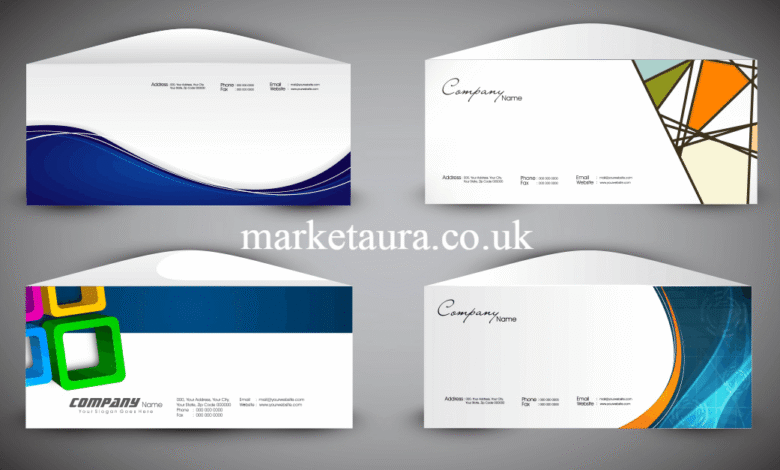
Custom printed business envelopes turn an ordinary piece of mail into a recognizable part of your brand. When customers receive a letter, invoice, proposal, statement, or marketing package, the envelope is often the first branded element they see.
A well designed envelope can reinforce your logo, brand colors, company name, and professional image before the recipient reads a single word. The key is to balance branding with practical mailing requirements. Your design should look distinctive while keeping the recipient address, return address, postage, and other important information clear and easy to process.
Whether you need standard business envelopes for daily correspondence or larger formats for brochures and catalogs, the right combination of envelope size, paper stock, printing, and personalization can make your mail look more professional.
Why Do Custom Printed Business Envelopes Matter?
Custom printed business envelopes help businesses create a consistent and professional identity across their physical communications. They can support brand recognition while making routine correspondence look more intentional.
A branded envelope is especially useful for:
- Business letters
- Invoices and statements
- Client correspondence
- Contracts and proposals
- Promotional mail
- Direct mail campaigns
- Brochures and catalogs
- Official business documents
The strongest designs do not try to put every piece of company information on the envelope. Instead, they use a few recognizable elements, such as the company logo, brand colors, company name, and return address.
This creates a cleaner first impression and keeps the envelope functional.
What Should You Put on a Custom Business Envelope?
The most useful elements are your company logo, business name, return address, brand colors, and the recipient address. Depending on the purpose of the mailing, you may also include a website, tagline, department name, or short promotional message.
For most business correspondence, consider including:
- Company logo
- Business name
- Return address
- Brand colors
- Recipient name
- Recipient address
- Website or contact information when appropriate
- Optional tagline or campaign message
Your envelope logo should be recognizable without dominating the entire design. The recipient address should remain the most important functional element on the front.
USPS guidance places the return address in the upper left area of the address side and emphasizes clear, legible addressing. Keeping branding away from critical addressing areas helps preserve both appearance and mailing functionality.
Choosing the Right Envelope Size
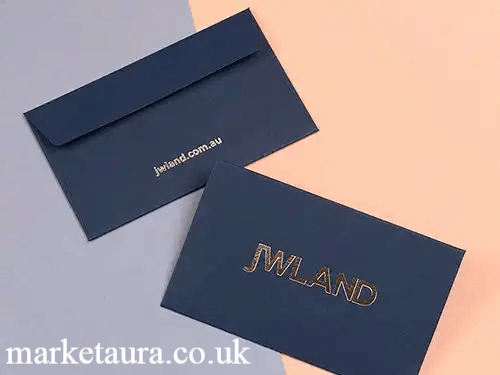
Envelope size should be based on what you are mailing. Choosing an attractive design is not enough if the document must be folded unnecessarily or does not fit comfortably.
#10 Business Envelopes
The #10 envelope is a common choice for everyday business correspondence. It works well for letters, invoices, statements, and other standard documents.
It is a practical option when your business sends a large volume of routine correspondence.
Windowed Envelopes
Windowed envelopes can make business mailing more efficient because the recipient address can appear through the window from the document inside.
They are particularly useful for invoices, statements, notices, and recurring correspondence where addresses are generated electronically.
6 × 9 Envelopes
A 6 × 9 envelope provides more space than a standard business envelope and can work well for larger documents, brochures, and promotional materials.
Catalog and Large Format Envelopes
Catalog envelopes and other large format options are useful when you want to mail documents without excessive folding.
For larger mailpieces, remember that postal classification can affect postage. USPS currently classifies certain large envelopes as flats based on their dimensions and thickness, so businesses should check current mailing standards before producing a large campaign.
How Do You Choose the Right Paper Weight?
Paper weight affects the look, feel, and perceived quality of a business envelope. The best choice depends on how the envelope will be used.
A lightweight stock can be suitable for everyday correspondence where cost and efficiency are priorities. A heavier stock can create a more substantial and premium impression for proposals, invitations, special announcements, and high value marketing materials.
Consider these factors:
- Mailing frequency
- Printing method
- Desired appearance
- Envelope durability
- Budget
- Contents inside the envelope
- Postal requirements
For everyday business communication, a practical stock may be preferable to an unnecessarily heavy material. For premium correspondence, a heavier paper can provide a more substantial feel.
Which Printing Options Work Best for Business Envelopes?
Full color printing is a strong option when your brand relies on specific colors, detailed graphics, or photography. Simpler one or two color printing can also work well when your identity is primarily based on a logo and limited color palette.
Full Color Printing
Full color printing gives you more freedom with brand colors, illustrations, patterns, and promotional artwork.
It is particularly useful for marketing materials and direct mail campaigns where visual impact matters.
One or Two Color Printing
A limited color palette can create a clean corporate appearance. It can also make the envelope easier to coordinate with existing letterhead and other stationery.
Special Finishes
For premium applications, consider:
- Embossing
- Debossing
- Foil stamping
- Metallic finishes
- Decorative borders
- Custom interior printing
These finishing techniques can add visual or tactile interest, but they should support the brand rather than overwhelm it.
How Should You Design a Business Envelope With a Logo?
Place the logo where it can be seen clearly without interfering with the recipient address, postage, or other postal elements.
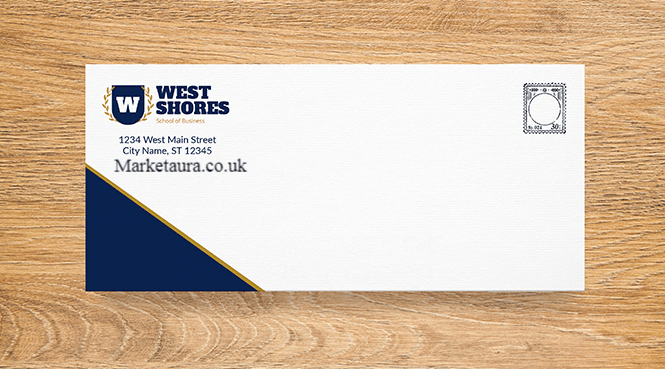
A simple approach is to place the company logo and return address in the upper left area while maintaining sufficient whitespace around the design.
Your logo should match the branding used across your:
- Website
- Business cards
- Letterhead
- Invoices
- Brochures
- Presentation materials
- Packaging
Consistency is more valuable than complexity. When the same colors, logo treatment, typography, and visual style appear across multiple touchpoints, the envelope becomes part of a recognizable brand system.
What Colors Should You Use?
Custom envelope colors should support your existing brand identity rather than introduce unrelated colors.
If your company already has established brand colors, use those as the starting point. You can also use a neutral envelope with branded printing for a professional appearance.
A useful color strategy is:
- Neutral colors for conservative corporate communication
- Brand colors for stronger recognition
- Bold colors for promotional campaigns
- Subtle accent colors for professional stationery
- Custom colors for event specific or campaign specific mail
Avoid using too many competing colors. Two or three coordinated colors can often create a cleaner result than a crowded palette.
How Do Fonts and Typography Affect Envelope Design?
Typography affects both appearance and readability. Your envelope fonts should be easy to read, especially for addresses and important business information.
Serif fonts can create a traditional and formal appearance. Sans serif fonts often feel cleaner and more modern. Script fonts can work for special events, but they are usually less appropriate for important address information.
When selecting typography:
- Prioritize readability
- Use consistent brand fonts
- Avoid overly decorative type for addresses
- Create clear visual hierarchy
- Leave sufficient whitespace
- Make important information easy to locate
The goal is not simply to make the envelope attractive. It should remain functional when printed and mailed.
How Should You Arrange the Envelope Layout?
A good envelope layout creates a clear visual hierarchy.
The recipient address needs enough space and contrast to remain easy to read. Your logo and branding should support the design without competing with the mailing information.
A practical layout can include:
Upper left: Logo and return address
Center: Recipient name and delivery address
Upper right: Postage area
Additional space: Optional brand message or decorative elements
USPS recommends keeping addressing clear and properly positioned. Its current mailing standards also provide detailed requirements for mailpiece elements, dimensions, and preparation.
Before approving a large print run, always check the current USPS standards that apply to your particular mailing class and format.
Custom Printed Business Envelopes With Logo and Return Address
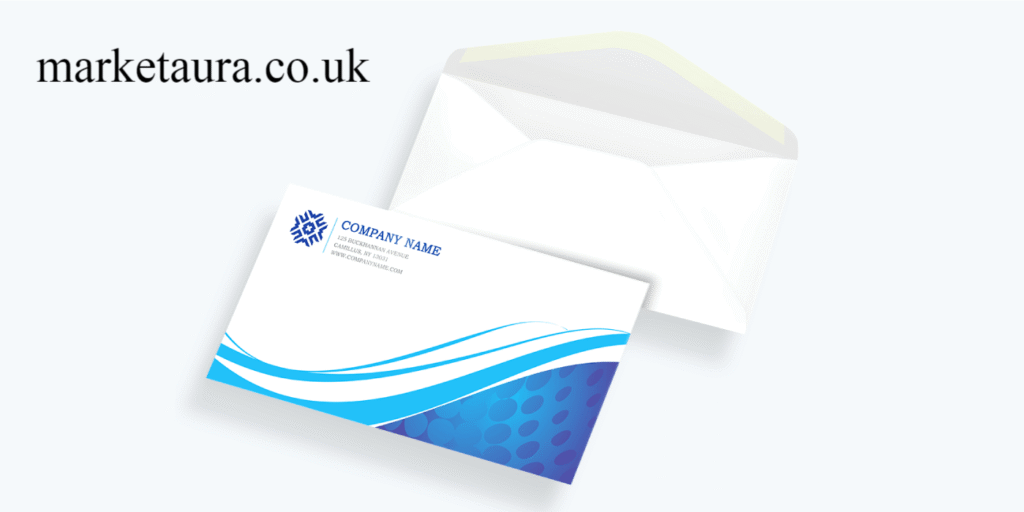
Custom business envelopes with logo and return address are among the most practical options for companies that send regular correspondence.
The logo helps identify the sender while the return address provides useful mailing information. USPS also notes that a return address can serve as a branding opportunity when properly placed.
For a professional appearance, keep the return address consistent across your stationery and other printed materials.
Include the company name and complete return address where appropriate. Make sure the text remains legible and does not interfere with the delivery address or postage area.
How Can Personalization Improve Business Envelopes?
Envelope personalization allows businesses to create different versions of the same basic design for departments, campaigns, locations, or customer groups.
Examples include:
- Department names
- Branch locations
- Campaign names
- Promotional messages
- Customer specific information
- Event details
- Response instructions
Personalization is especially valuable for direct mail because the envelope can be designed around the purpose of the communication rather than using one generic design for every campaign.
How Much Branding Is Too Much?
The best envelope branding is recognizable but restrained.
A common mistake is trying to fill every available space with logos, slogans, phone numbers, website addresses, graphics, and promotional copy. This can make an envelope look crowded and may reduce the clarity of the actual mailing information.
Instead, prioritize:
- Brand recognition
- Address readability
- Professional appearance
- Consistent visual identity
- Purpose of the mailing
Think of the envelope as the introduction to your communication, not the entire advertisement.
How to Order Custom Printed Business Envelopes
Ordering becomes easier when you prepare the required information before contacting a printing service.
Step 1: Define the Purpose
Decide whether the envelopes are for invoices, letters, direct mail, catalogs, proposals, or another purpose.
Step 2: Select the Size and Style
Choose a standard, windowed, catalog, or large format envelope based on your contents.
Step 3: Choose Paper Stock
Select a paper weight and finish that match your budget and desired brand image.
Step 4: Prepare Your Artwork
Provide a high quality logo and approved brand colors. If you do not have a finished design, ask whether the printing service provides design support.
Step 5: Confirm the Layout
Check logo placement, return address, recipient address area, postage area, colors, fonts, and whitespace.
Step 6: Request a Proof
A digital or physical proof can help identify layout, color, typography, and sizing problems before the full order is printed.
Step 7: Approve the Production Run
Once the proof has been checked, confirm the quantity, printing specifications, delivery schedule, and final cost.
What Makes a Good Custom Envelope Printing Service?
A reliable custom envelope printing service should provide more than basic printing.
Look for a provider that offers:
- Multiple envelope sizes
- Different paper stocks
- Window and non window options
- Full color printing
- Professional proofing
- Design assistance when needed
- Consistent print quality
- Clear turnaround times
- Bulk order options
- Appropriate finishing choices
For businesses ordering large quantities, compare the total cost rather than focusing only on the price per envelope. Setup fees, artwork preparation, finishing, shipping, and reprint policies can all affect the final cost.
Custom Printed Business Envelopes Wholesale
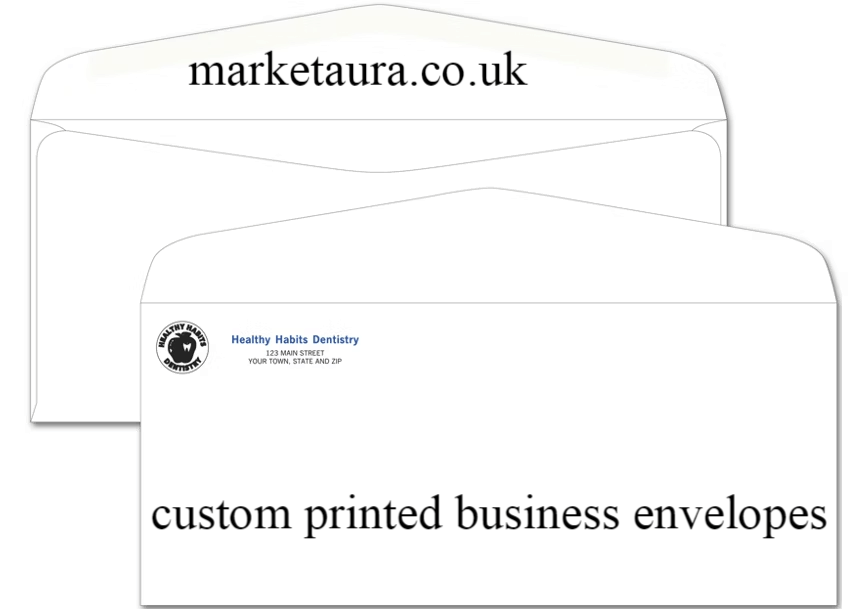
Wholesale ordering can make sense when your business sends a large volume of mail throughout the year.
Before placing a large order, estimate your realistic usage. Ordering substantially more envelopes than you can store or use may create unnecessary inventory.
Ask the printer about:
- Quantity discounts
- Production time
- Storage requirements
- Reorder consistency
- Proofing
- Shipping
- Print specifications
- Minimum order quantities
A good supplier should also be able to reproduce the same brand colors and artwork consistently on future orders.
Frequently Asked Questions
Can I order custom printed business envelopes with a logo?
Yes. A logo can be printed directly onto business envelopes as part of a branded envelope design. Keep the logo clear, consistent with your existing brand identity, and positioned so it does not interfere with postal addressing.
Can I get business envelopes with both a logo and return address?
Yes. Custom business envelopes can include both elements. A common approach is to place the logo and return address together in the upper left area while keeping the delivery address clearly separated.
What are the best custom printed business envelopes for everyday correspondence?
A standard business envelope, particularly a #10 format, is a practical choice for letters, invoices, statements, and routine correspondence. A windowed version can be useful when the recipient address is printed on the enclosed document.
Are custom printed business envelopes available wholesale?
Yes. Many printing providers offer bulk and wholesale quantities. Compare quantity pricing, paper options, setup costs, shipping, proofing, and reorder consistency before selecting a supplier.
Can I order custom printed business envelopes in the USA?
Yes. Businesses in the USA can order custom envelopes from printing companies that serve their location or ship nationally. Before ordering, confirm that the selected envelope design and layout are appropriate for the intended USPS mailing format.
How do I make custom envelopes look professional?
Use a clean layout, consistent brand colors, a high quality logo, readable typography, sufficient whitespace, and an appropriately sized envelope. Avoid excessive graphics that compete with the recipient address.
Final Takeaway
Custom printed business envelopes are a simple way to connect everyday business communication with your broader brand identity. The strongest designs combine practical mailing requirements with consistent visual branding.
Start with the purpose of the envelope, then choose the right size, paper stock, printing method, colors, typography, and finishing. Add your logo and return address carefully, keep the recipient information highly readable, and request a proof before committing to a large production run.
When every envelope follows the same professional visual language as your website, stationery, invoices, and marketing materials, even routine mail can become a consistent brand touchpoint.
Author Bio: Johan Harwen is a content writer specializing in business branding, marketing, and professional communication strategies. He creates practical, SEO focused guides that help businesses build a stronger and more recognizable brand.
Email: johanharwen@314gmail.com
Author Name: Johan Harwen