


Introduction
When someone searches for a plumber, restaurant, dentist, salon, lawyer, or shop near them, you want your business to appear before your competitors. That is where local SEO tips can make a real difference. Local SEO helps search engines understand where your business operates, what you offer, and why customers should trust you.
The good news is that you do not need a huge marketing budget to improve local visibility. You need accurate business information, useful local content, genuine customer reviews, strong website pages, and consistent signals across the web.
Google says local results are mainly influenced by relevance, distance, and prominence. In 2026, local search is also becoming more connected with AI driven discovery, which makes clear and trustworthy business information even more important.
This guide explains practical local SEO tips you can use to improve your Google Business Profile, website, reviews, local content, citations, and overall online presence.
What Is Local SEO?
Local SEO is the process of improving your online presence so people can find your business when they search for products or services in a specific geographic area.
For example, someone might search for:
- Best coffee shop near me
- Dentist in Chicago
- Emergency plumber in Houston
- Local SEO agency in New York
- Italian restaurant near downtown
Local SEO helps your business appear in Google Search, Google Maps, local results, and other places where customers discover nearby businesses.
Google explains that local ranking primarily considers relevance, distance, and prominence. This means your business needs to match the search, serve the right location, and demonstrate that it is a credible and established business.
10 Local SEO Tips That Actually Work
1. Fully Optimize Your Google Business Profile
Your Google Business Profile is one of the most important assets for local search.
Complete every relevant section and make sure your information matches your real business.
Include:
- Correct business name
- Accurate address
- Local phone number
- Website
- Business category
- Relevant secondary categories
- Opening hours
- Services
- Products where applicable
- Business description
- High quality photographs
- Videos where appropriate
Do not add unnecessary keywords to your business name. Use your real world business name consistently.
Google specifically recommends providing complete and detailed business information because it helps the search engine understand relevance.
2. Choose the Right Business Category
Your primary category tells Google what your business mainly does.
For example, a bakery should not choose a generic category such as “shop” when a more specific category is available.
Your category should represent your core service.
You can also add relevant secondary categories when they accurately describe your business. Avoid adding categories simply because you want to rank for additional searches.
This is one of the simplest local SEO tips because the right category can help Google connect your business with relevant searches.
3. Create Dedicated Local Service Pages
Do not put every service on one general page if your business offers several important services.
Create dedicated pages when each service deserves useful information.
For example, a plumbing company could have separate pages for:
- Water heater repair
- Drain cleaning
- Emergency plumbing
- Sewer repair
- Bathroom plumbing
Whitespark’s 2026 Local Search Ranking Factors research places dedicated pages for individual services among the strongest local organic ranking factors.
Each page should explain the service clearly, mention the areas you genuinely serve, answer customer questions, and provide a clear way to contact your business.
4. Use Location Keywords Naturally
Your website should make your service area clear without stuffing city names into every sentence.
Use natural phrases such as:
- Dentist in Austin
- Roofing services in Dallas
- Family lawyer serving Phoenix
- Italian restaurant in Brooklyn
You can also mention neighborhoods, nearby communities, landmarks, and service areas when they are genuinely relevant.
One of the most useful local SEO tips is to write for people first and search engines second.
Avoid awkward sentences such as:
“Best dentist Austin dentist Austin dental clinic Austin.”
That does not look trustworthy and can damage the user experience.
5. Build a Review Strategy
Reviews influence both customer decisions and local search visibility.
BrightLocal’s 2026 Local Consumer Review Survey found that 83% of consumers who were asked to leave a review went on to leave one. That shows how powerful a simple review request can be.
Ask satisfied customers for honest feedback after a completed purchase or service.
Never buy fake reviews or pressure customers to provide a specific rating.
Encourage genuine customers to describe their actual experience. Detailed feedback can provide useful information to future customers.
Respond to positive and negative reviews professionally. A thoughtful response demonstrates that your business listens.
6. Keep Your Business Information Consistent
Your business information should be consistent across important online platforms.
Pay close attention to:
- Business name
- Address
- Phone number
- Website
- Business category
- Opening hours
Inconsistent information can create confusion for customers and search engines.
Check major directories, social profiles, industry websites, local directories, and review platforms.
Consistency is especially important when your business moves, changes its phone number, or updates its branding.
7. Publish Useful Local Content
Local content gives your website more opportunities to answer searches related to your area.
Instead of publishing generic articles, create content that solves real problems for people in your market.
For example, a roofing company could publish:
- How to prepare your roof for hurricane season
- Common roofing problems in coastal areas
- How often homes in your area need roof inspections
- What to check after a major storm
This approach creates topical relevance while providing genuine value.
Strong local SEO tips are not only about rankings. They should also help customers understand why your business is useful in their specific location.
8. Earn Local and Industry Relevant Links
Links from trustworthy websites can strengthen your website’s authority.
Focus on quality rather than quantity.
Potential opportunities include:
- Local newspapers
- Community organizations
- Industry associations
- Local business organizations
- Chambers of commerce
- Sponsorship pages
- Local events
- Relevant professional directories
Whitespark’s 2026 research continues to identify quality inbound links as an important local organic ranking factor.
Do not purchase large numbers of low quality links. One relevant local link can be more valuable than dozens of unrelated links.
9. Add Local Business Structured Data
Structured data can help search engines better understand important information about your organization.
Source: Ahrefs
Depending on your business, relevant structured data can communicate details such as:
- Business name
- Address
- Phone number
- Opening hours
- Website
- Service information
- Location
Structured data does not guarantee higher rankings. Think of it as a way to communicate information more clearly rather than a shortcut to the top of Google.
10. Track Your Local SEO Performance
You cannot improve what you do not measure.
Track important performance indicators such as:
| Metric | Why It Matters |
|---|---|
| Google Business Profile views | Shows profile visibility |
| Website organic traffic | Measures search discovery |
| Phone calls | Shows customer intent |
| Direction requests | Indicates local interest |
| Website leads | Measures conversions |
| Review growth | Shows reputation development |
| Local rankings | Helps identify visibility changes |
| Conversion rate | Shows business impact |
Do not focus only on rankings.
A ranking improvement is useful, but more calls, bookings, visits, and qualified leads matter more.
What Are the Biggest Local SEO Mistakes?
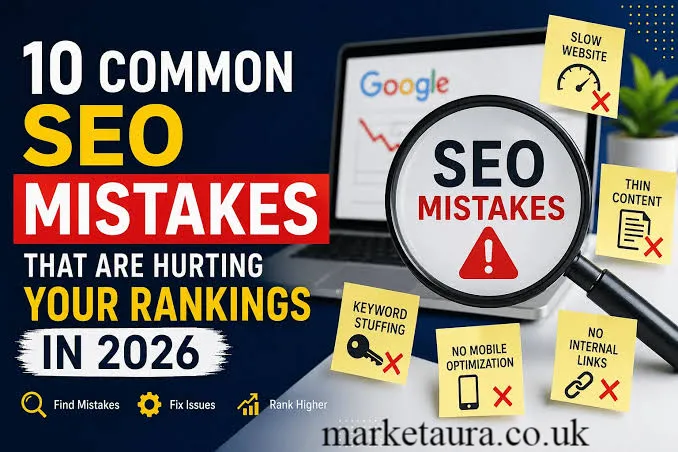
Some businesses spend months creating content while ignoring basic information.
Avoid these common mistakes:
- Using an incorrect Google Business Profile category
- Leaving important profile fields incomplete
- Publishing duplicate location pages
- Buying fake reviews
- Ignoring negative reviews
- Keyword stuffing city names
- Using inconsistent business information
- Creating thin local content
- Ignoring mobile usability
- Building low quality backlinks
The best local SEO tips usually involve improving fundamentals before chasing complicated tactics.
How AI Is Changing Local Search
Local search is evolving as customers use Google, social platforms, maps, and AI tools to research businesses.
BrightLocal’s recent research shows consumers are increasingly using alternative platforms and AI alongside traditional review research. This creates an important opportunity for local businesses.
Your business information should be clear and consistent everywhere.
Your website should answer specific customer questions.
Source: Semrush
Your reviews should describe real experiences.
Your business profile should accurately explain what you offer.
This approach helps both traditional search engines and newer discovery systems understand your business.
A Simple Local SEO Checklist
Use this checklist to organize your next steps:
- Complete your Google Business Profile.
- Select the most accurate primary category.
- Add relevant secondary categories.
- Verify your address and contact details.
- Add professional business photos.
- Create dedicated service pages.
- Add genuine location information.
- Request honest customer reviews.
- Respond to customer feedback.
- Build relevant local relationships and links.
- Publish useful local content.
- Check your business information across major platforms.
- Improve mobile website performance.
- Add appropriate structured data.
- Monitor calls, leads, traffic, and rankings.
Expert Insight for Local Businesses
Darren Shaw of Whitespark has emphasized the importance of dedicated service pages, geographic relevance, quality links, and strong internal linking in the 2026 Local Search Ranking Factors research.
The bigger lesson is simple. Local SEO is no longer just about adding a city name to a webpage. You need to build a complete local entity that search engines and customers can understand.
Your Google Business Profile, website, reviews, links, services, location information, and customer experience should all tell the same story.
Conclusion
The strongest local SEO tips are practical rather than complicated. Start with an accurate Google Business Profile, create useful service pages, build genuine reviews, maintain consistent business information, publish helpful local content, and earn relevant links.
Google’s local system considers relevance, distance, and prominence, while modern customers increasingly look at reviews, photos, videos, and information from multiple sources.
Do not try to manipulate every ranking signal at once. Build a trustworthy local presence that genuinely helps customers.
Start with the basics, measure your results, and improve one area at a time. Your next local customer may already be searching for exactly what you offer.
Frequently Asked Questions
What is local SEO?
Local SEO is the process of improving a business’s online presence so it can appear more prominently when people search for products or services in a specific geographic area.
Why is local SEO important?
Local SEO helps nearby customers discover your business through Google Search, Google Maps, websites, reviews, and other online platforms.
What is the most important local SEO tip?
Start by completely and accurately optimizing your Google Business Profile. Then build strong service pages, genuine reviews, consistent business information, and useful local content.
How long does local SEO take to work?
Results vary by industry, location, competition, website authority, and the condition of your existing online presence. Some improvements can appear relatively quickly, while stronger organic growth can take several months.
Do Google reviews help local SEO?
Reviews are an important part of local visibility and customer trust. Google says reviews and positive ratings can contribute to prominence, while consumer research shows that reviews remain important during local business research.
How many reviews does a local business need?
There is no universal number that guarantees good rankings. Focus on earning genuine reviews consistently rather than trying to reach an arbitrary target.
Should I use city keywords on every page?
No. Use location terms naturally where they help customers understand your service area. Keyword stuffing can make your content difficult to read.
Is Google Business Profile free?
Yes. Businesses can create and manage a Google Business Profile without paying for the profile itself. Optional advertising and other marketing services are separate.
Can small businesses compete in local search?
Yes. Small businesses can compete by focusing on specific services, relevant locations, strong customer experiences, useful content, genuine reviews, and relationships within their communities.
Does AI affect local SEO?
Yes. Customers increasingly use AI and other platforms during business research. Clear business information, strong reviews, useful content, and consistent brand information can help your business remain understandable across changing discovery systems.
About the Author: Johan Harwen The author is an SEO and digital marketing content writer focused on practical search strategies, local business visibility, and content optimization. Their work simplifies complex SEO concepts into actionable advice that businesses can use to improve online discovery and customer engagement.
Email: johanharwen@314gmail.com
Author Name: Johan Harwen